

If your child needs a crown on a baby tooth, you’re not alone — and you’re not doing anything wrong. Crowns are one of the most common, effective, and protective treatments in pediatric dentistry today.
This page explains why baby teeth sometimes need crowns, the two types we offer, and how we help kids (and parents) feel comfortable every step of the way.
Why would a baby tooth need a crown?
A dental crown is like a strong helmet that covers and protects a tooth. In children, crowns are often recommended when a regular filling isn’t enough.
Common reasons include:
- Large or deep cavities
- A tooth that had a baby root canal (pulpotomy or pulpectomy)
- A tooth that is weak or broken
- High cavity risk or multiple areas of decay
Because baby teeth have thinner enamel than adult teeth, they can break or wear down more easily after treatment. A crown helps the tooth:
- Stay strong
- Stay comfortable
- Last until it naturally falls out
The factors we consider when picking a crown for a primary tooth are:
- How long does it need to last?
- Is it a back tooth or a front tooth?
- Are esthetics a concern?
Are crowns safe for kids?
Yes — crowns for primary (baby) teeth have been used safely for decades and are recommended by pediatric dental guidelines when indicated.
Crowns:
- Are sized for children’s teeth
- Do not interfere with adult teeth underneath
- Allow normal chewing, speaking, and smiling
The two types of crowns we offer
We offer two excellent crown options, and the right choice depends on the tooth (front or back), your child’s age (and subsequently how long does this tooth need to last), and your preferences as a family.
🦷 Traditional Stainless Steel Crowns (SSCs)
Stainless steel crowns are the most commonly used crowns for baby teeth — especially back molars (High House does not use SSCs on front teeth)
Why dentists use them so often
- Extremely durable and long-lasting
- Protect the tooth from future cavities
- Hold up well to chewing, grinding, and growing kids
- Often the best option after a baby root canal
These crowns are silver-colored and usually placed on back teeth, where they are rarely visible when your child smiles.
Pros
- Very strong and reliable
- One-visit placement
- Cost-effective
- Excellent track record
Things parents should know
- They are visible if placed on front teeth (which is why we don’t use them there)
- Appearance-focused families sometimes prefer tooth-colored options
📸 Image suggestion: Stainless steel crown on a back baby molar
Tooth-Colored Crowns
Tooth colored crowns for the back teeth are a newer, white option designed with modern families in mind.
They’re made from a flexible, BPA-free composite material, similar to boat hulls, that blends naturally with your child’s smile while offering durability that has been a sticking point with many previous problems with the back teeth.
Why parents love tooth-colored crowns
- Natural-looking and white
- No metal showing
- More flexible than traditional zirconia crowns
- Great option for esthetics
Why dentists recommend them
- Designed specifically for primary teeth
- Gentle on opposing teeth
- Comfortable for kids
- Aesthetic without sacrificing function
Things parents should know
- Not every tooth is a candidate
- Typically cost more than stainless steel crowns
- Best for low- to moderate-bite-force areas
Will my child feel pain getting a crown?
No — placing a crown should relieve discomfort, not cause it.
- We use local anesthesia to numb the tooth
- Sedation options are available for anxious or very young children
- Most crowns are placed in one visit
Kids usually adapt quickly and forget the crown is even there.
How long do crowns on baby teeth last?
Crowns are designed to last until the baby tooth naturally falls out.
They:
- Do not block adult teeth
- Fall out along with the baby tooth at the right time
- Rarely need replacement if cared for properly
Crowns, parenting, and real life (2026 edition)
We know modern parents are juggling a lot — work, childcare, screens, snacks, schedules, and everything in between.
Our approach to crowns is:
- Evidence-based, not aggressive
- Focused on long-term health, not quick fixes
- Honest about options, costs, and appearance
- Centered on keeping dental visits low-stress and positive
Choosing a crown isn’t about being “extra.” It’s about protecting your child’s comfort, sleep, nutrition, and confidence.
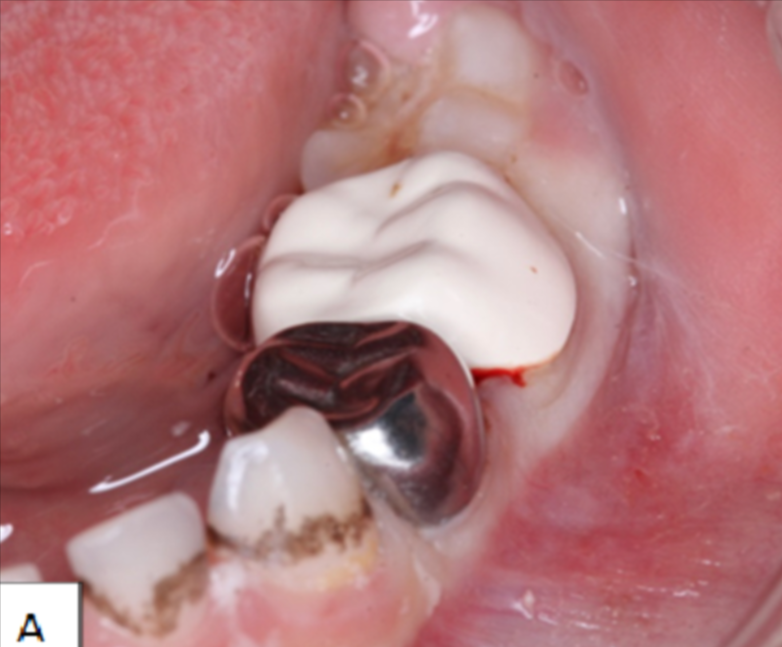
A stainless steel crown and a bioflex crown in the mouth of a young child with caries on the lower left quadrant.
Abdelhafez, A., Dhar, V. Comparative clinical performance of stainless steel, zirconia, and Bioflx crowns in primary molars: a randomized controlled trial. BMC Oral Health 25, 585 (2025). https://doi.org/10.1186/s12903-025-05869-8